- Home
- Best Treatments
- Natural remedies
Natural remedies for sleep apnea: what can help, what won't, and how to use them safely
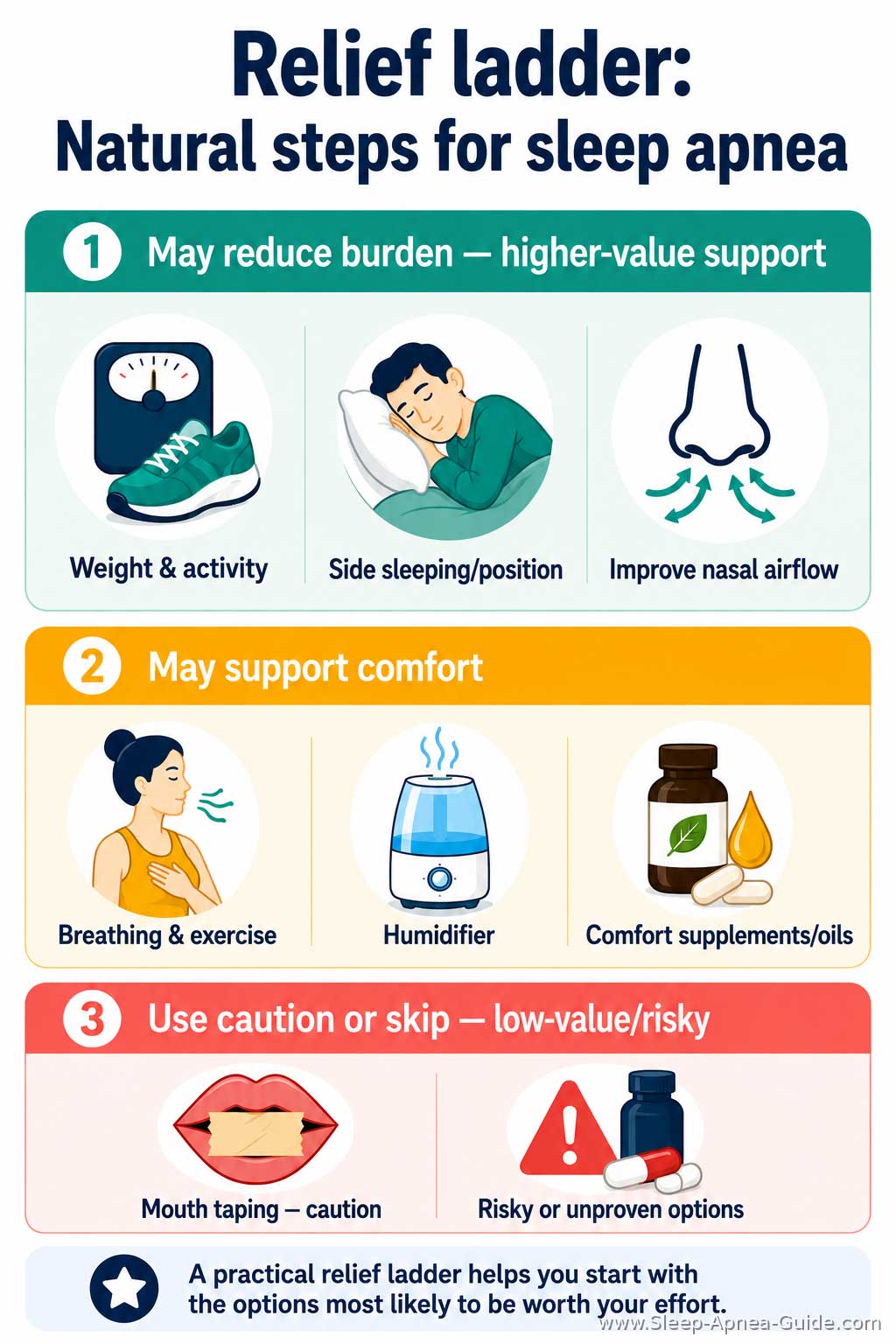
Some natural remedies for sleep apnea may reduce how often symptoms happen or make things easier to live with, but they work as support, not a replacement for treatment. What helps most depends on your pattern, how severe it seems, and whether you're already using CPAP or something else. Here, I sort steps into what may genuinely help, what mainly adds comfort, and what's mostly hype or risky.
My method here is simple: I only include steps with real evidence behind them, sorted by how much they might actually help and how safe they are — and I'm upfront when something is mostly for comfort, not a cure.
What I won't do is promise a cure or suggest skipping a diagnosis or prescribed treatment. If you're waking up gasping for air, or you've caught yourself falling asleep while driving, please don't wait on home steps — get evaluated.
Start with the support steps most likely to help
If you've already tried a few random tips and you're tired of guessing what's actually worth your time, you're not alone — that's exactly what this table is for. I sorted the steps below by real research and medical guidelines, how well they fit different situations, and how safe they are, so you don't have to sift through the hype yourself.
Start by finding your situation in the "Best fit" column, then try the one step that matches it — that's really all you need to do here. Just keep in mind: none of these replace a real diagnosis or treatment. If you're not diagnosed yet, don't let a small improvement here delay getting checked — and if you're already on treatment, these are meant to support it, not stand in for it.
| Step | Best fit | Limits (What it probably won't change) | Safety note |
|---|---|---|---|
| Weight change and daily activity | People with OSA linked to weight | Takes time; won't change underlying bone or airway anatomy | Discuss major exercise or diet changes with a clinician |
| Side-sleeping and position changes | Positional OSA | Won't resolve non-positional apnea events | May cause shoulder or hip discomfort over time |
| Nasal airflow support (strips/dilators) | Mild congestion, CPAP users | Won't prevent the throat from collapsing | Watch for skin irritation from adhesives |
| Mouth-throat exercises (myofunctional) | Mild OSA, snoring | Requires strict daily consistency to see any benefit | Stop if exercises cause jaw pain or clicking |
Weight change and daily activity
If your obstructive sleep apnea (OSA) is linked to weight, this tends to be one of the higher-value steps to work on — it's less likely to move the needle if your airway issue is more about anatomy or position than weight.
What it may help: even a modest weight reduction can lower the fatty tissue around your upper airway, which may reduce how often symptoms happen over time, and daily movement also tends to improve muscle tone and general sleep quality.
What it won't change: this won't happen overnight, and it won't change underlying bone or airway anatomy — so it's something you do alongside treatment, not a fix you'll feel within days.
A reasonable place to start: pick one sustainable change, like adding a short daily walk, rather than overhauling everything at once — and keep it going alongside whatever clinical treatment you're already pursuing.
Research suggests a 10% weight loss is associated with an average 26% drop in apnea-hypopnea index, while a 10% weight gain is associated with an average 32% increase.[1]
Safety note: talk to a clinician before making any major changes to your exercise or diet, especially if you have other health conditions. Clinical guidelines recommend a structured weight-loss plan — not just casual advice to 'eat less' — for adults with OSA who are overweight or obese, since sustained weight loss is linked to lower average OSA severity.[2]
Side-sleeping and position changes
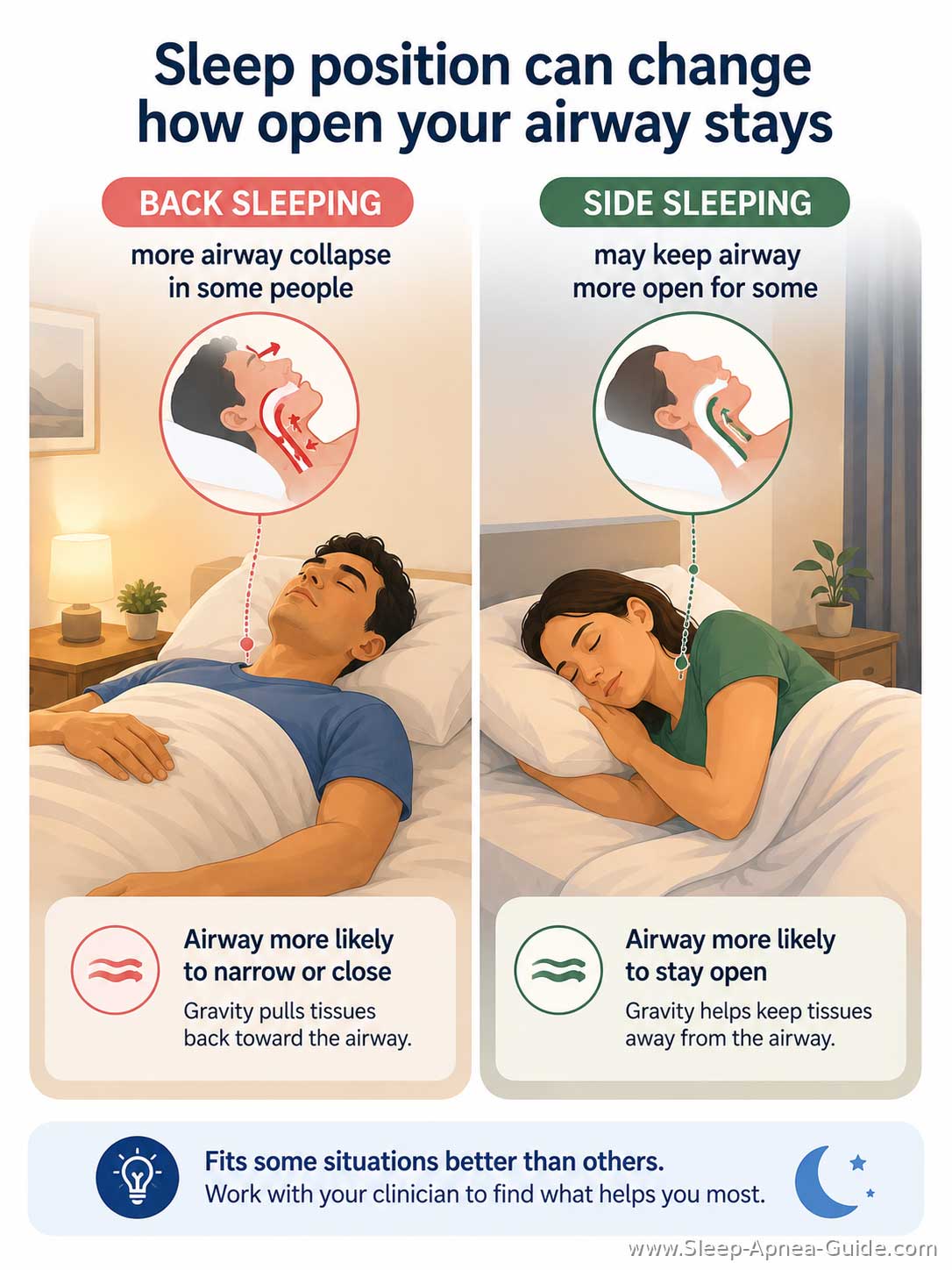
Side-sleeping is worth trying if your sleep study specifically mentioned "positional" or "worse on your back" — but if you're still waiting for a diagnosis, it can still be a reasonable first thing to try, since it carries little risk to test.
One clue, if you don't have a study yet: if you or a partner have noticed your snoring or breathing pauses are worse when you end up on your back, that's a sign this might help, not a diagnosis on its own.
Here's why it can matter: when you sleep on your back, gravity naturally pulls your tongue and soft tissues downward, which can narrow or block the airway — shifting to your side can help keep that airway more open.
Studies define positional OSA as breathing events at least twice as frequent lying on the back as in other positions, and research shows positional therapy can reduce AHI by roughly 7 events per hour compared with no treatment in that group.[3]
To try it, pick one approach: a firm pillow wedged behind your back, a wearable positional bumper, or a pillow specifically designed to encourage side-sleeping.
Research notes that many people roll back onto their back during sleep without a method that actively prevents it, which is why device-based approaches — like vibration alarms or posture trainers — are studied more often than advice alone.[3]
Just don't expect it to fix everything — it mainly helps with back-related airway collapse, so it may not help everyone, and some people find it takes a few nights to get used to, or notice some shoulder or hip discomfort along the way.
Nasal airflow support
Nasal strips, internal dilators, and saline rinses mainly support comfort by reducing nasal resistance and making it easier to breathe through your nose.
What it may help: easier nasal breathing, especially if you deal with congestion or you're a CPAP user trying to make your mask more comfortable.
What it won't change: it doesn't prevent the throat itself from collapsing, so it's a comfort tool, not something that reduces how often symptoms happen on its own.
A reasonable place to start: try one option, like a nasal strip, on nights when congestion is the main thing keeping you up.
Sleep medicine guidelines don't list nasal strips or dilators among core treatments shown to reduce OSA severity — they're generally classified as comfort or snoring-support measures.[4]
Safety note: watch for skin irritation from adhesives if you're using strips regularly.
Mouth-throat exercises (myofunctional therapy)
Myofunctional therapy involves specific mouth and throat exercises designed to strengthen the muscles around your airway.
What it may help: this may reduce how often symptoms happen if your OSA is mild. One pooled analysis of adult studies found AHI dropping from an average of about 24.5 to 12.3 events per hour after myofunctional therapy programs, alongside reduced snoring and daytime sleepiness.[5]. But only with consistent daily practice — it's not something that works from occasional effort.
What it won't change: it has more limited evidence than medical devices. The evidence base for these exercises is smaller than for CPAP or oral appliances, with fewer and smaller studies overall.[5]. And it won't replace a diagnosis or your prescribed treatment.
A reasonable place to start: if you know you can commit to a daily routine, this is worth trying — if daily consistency isn't realistic for you right now, a step like side-sleeping may be easier to stick with. Some people use app-based programs to keep track of daily practice.
Safety note: stop or pause if the exercises cause jaw pain or clicking.
Match the remedy to your sleep apnea situation
Not all natural remedies for sleep apnea are universal fixes. Your specific diagnosis, your anatomy, and whether you are currently undergoing treatment dictate which steps are actually worth trying and which might just be a waste of energy.
Mild or positional obstructive sleep apnea
If your sleep study showed mild or strictly positional OSA, targeted steps like side-sleeping and mouth-throat exercises are most likely to help. Because your airway collapse is less severe or tied to gravity, these natural strategies can sometimes keep symptoms manageable. However, it is still worth discussing with your clinician to ensure your sleep quality is genuinely improving and not silently worsening.
Waiting for diagnosis, or struggling with current treatment
If you are waiting for a formal sleep study or finding your current treatment difficult to tolerate, focus on practical, short-term comfort steps. Elevating your head slightly, treating seasonal nasal allergies, and avoiding alcohol before bed are safe ways to support your breathing.
Above all, prioritize safety: do not delay clinical evaluation if red flags like severe daytime sleepiness or loud choking appear.
Use natural steps alongside CPAP or other treatment
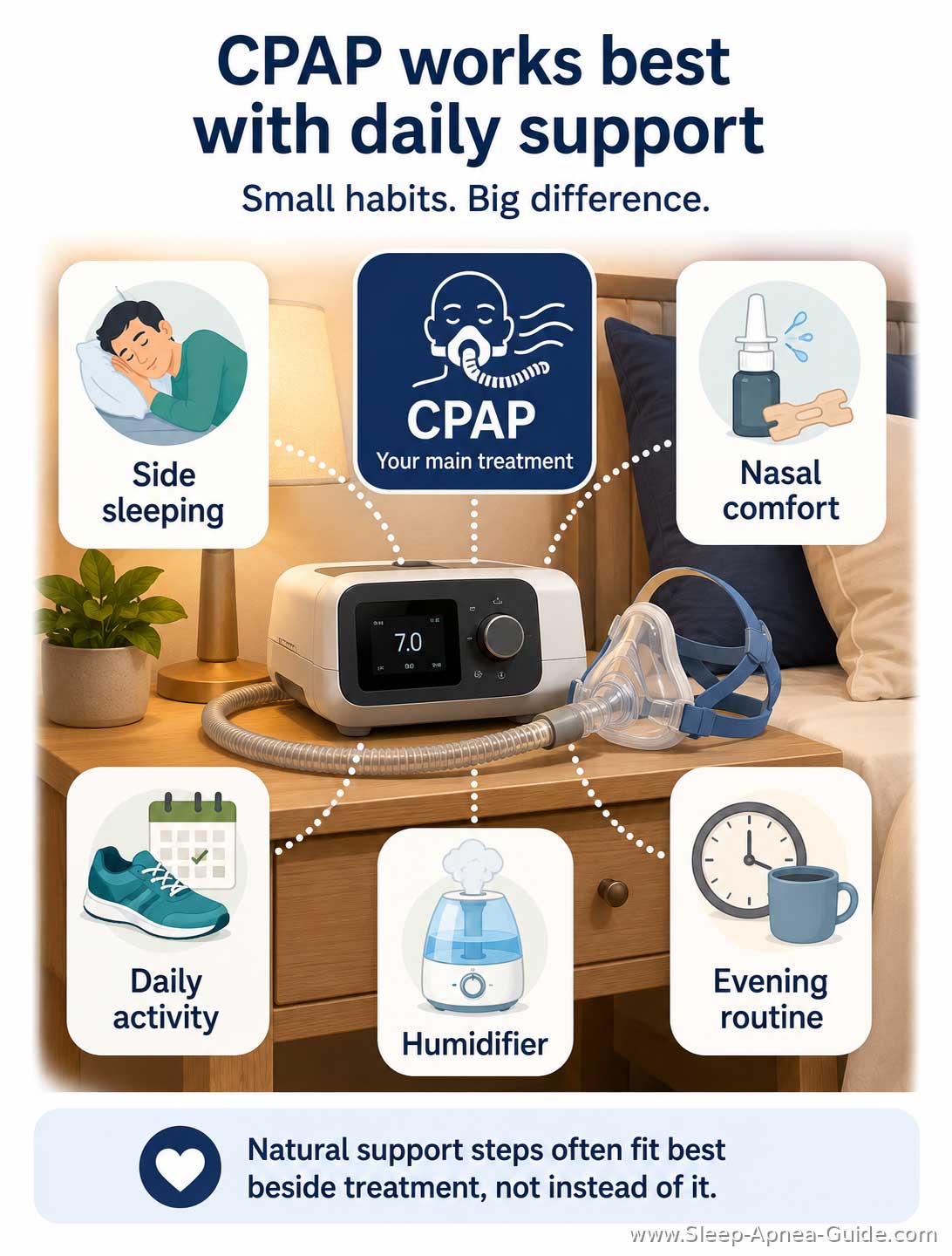
Natural remedies for sleep apnea do not have to be an alternative to medical devices. In fact, they often work best when paired with them to make therapy more comfortable, effective, and livable.
If you use CPAP
If you're technically using CPAP but still waking up with a dry, stuffy nose or fighting the mask off because it just doesn't feel like enough air is coming through, a few support steps can make the nights easier — even though they won't fix your settings, mask fit, or the underlying apnea itself.
For nasal comfort, saline sprays and nasal strips can help, and if your machine has a heated humidifier or heated tubing, using it can also cut down on the dryness and congestion that make masks feel unbearable. Heated humidification is commonly used with CPAP specifically to reduce dry nose, dry mouth, and irritation from pressurized airflow.[6]
For leaks and positioning, side-sleeping may help for some people , though any actual pressure setting changes should always go through your clinician or your equipment supplier, not be adjusted on your own.
It's worth remembering these steps mainly support comfort — they won't fix a poorly fitted mask, the wrong mask type, or a nasal blockage that needs its own treatment.
A reasonable next step: pick one comfort lever, like humidity or a nasal strip, and give it a week. If you're still feeling like you can't get enough air or the congestion doesn't ease up, that's worth a real conversation with your clinician about your settings or mask.
For a fuller look at how these fit into your overall plan, see our Treatment overview (non-device + device).
If you use an oral appliance or positional therapy
Oral appliances work by gently advancing the jaw to open the airway, a method that pairs very well with daily activity and weight management. If you use positional therapy wearables, maintaining good nasal airflow with natural saline rinses can further reduce your breathing effort. Always discuss combination strategies with your clinician to ensure your home steps complement your primary treatment.
Be careful with remedies that sound natural but solve the wrong problem
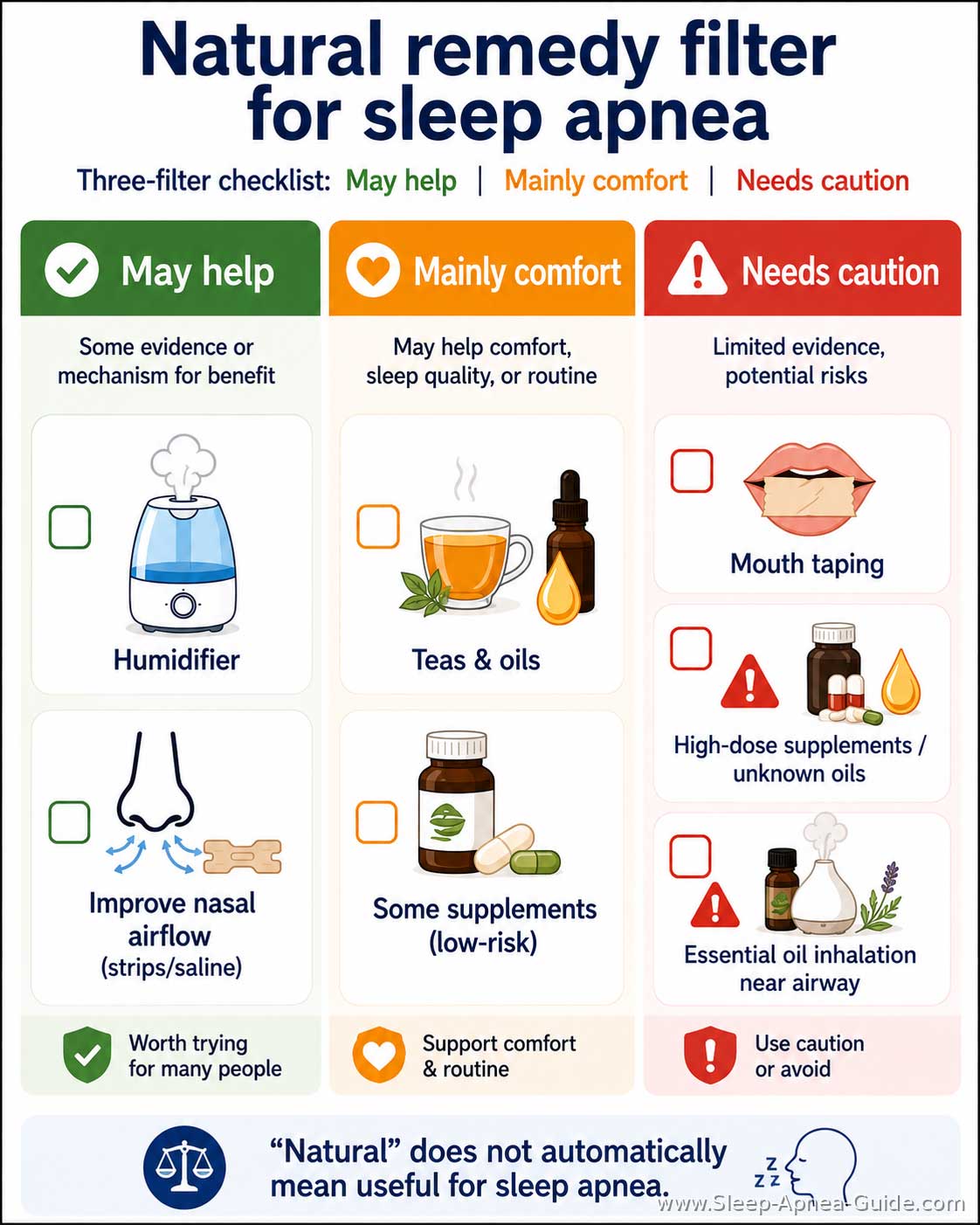
The internet is full of sleep apnea home remedies that promise quick, effortless relief. Unfortunately, many of these mainly affect general sleep quality rather than preventing physical airway collapse, and some carry genuine health risks.
Supplements, teas, oils, and bedroom humidifiers
Essential oils, herbal teas, and bedroom humidifiers (room humidifiers, not your CPAP's built-in humidifier) are popular for bedtime routines, but they require a realistic perspective regarding sleep apnea. These can support general relaxation or ease snoring-related dryness, but they're not a treatment for sleep apnea itself — snoring relief and apnea control are not the same thing.
What it may help: General sleep environment, relaxation, and soothing dry nasal passages or throat irritation from snoring.
Best fit: People looking to wind down before bed, or a room humidifier for general dryness — usually not worth adding unless dryness is already a problem for you.
Note: This is separate from your CPAP's built-in humidifier, which is a comfort feature of therapy, not something this section covers.
What it probably won't change: Your actual apnea-hypopnea index (AHI) or physical airway collapse.
Government health guidance groups melatonin, herbal teas, and aromatherapy as complementary approaches to general sleep problems, not as proven treatments for obstructive sleep apnea itself.[7]
Safety note: With essential oils, avoid inhaling anything that irritates your airway, and stop use if it worsens congestion or coughing. Be aware of known interaction and dosing risks with herbal supplements too; always check with a pharmacist or clinician before mixing them with medications.
Mouth taping and other risky shortcuts
Mouth taping has become a trendy internet hack, claiming to force nasal breathing and cure snoring. For people with sleep apnea, this can be a dangerous shortcut.
The American Academy of Sleep Medicine has publicly stated that mouth taping is not recommended by sleep experts as a treatment for sleep apnea, and that it can be dangerous for people whose nasal breathing is impaired.[8]
What it may help: Encouraging nasal breathing in healthy individuals without sleep disorders.
Best fit: This isn't a DIY tactic to try if you snore, suspect OSA, or already have OSA — taping over an airway that isn't fully open is the exact opposite of what you want. Whether it's ever appropriate is a clinician decision for specific cases — not something to pursue on your own.
CPAP note: Some CPAP users ask about mouth taping for nasal-mask leak control. That's sometimes used, but only under clinician guidance, and only once your therapy is already working well — not as a first fix.
What it probably won't change: It will not resolve sleep apnea and cannot force an obstructed throat to open. A 2024 scoping review found the published evidence on nocturnal mouth taping to be limited and inconsistent, and it did not support broad claims of benefit.[10]
Safety note: Taping your mouth shut can dangerously lower your oxygen levels if your airway is already obstructed — which is the core problem in sleep apnea. On top of that, it can trigger real panic if you can't get enough air through your nose alone.
Adhesive placed on the lips or nearby skin can also cause irritation or allergic skin reactions, and removal can be uncomfortable for people with sensitive skin.[9]
If your goal is easier nasal breathing or fewer CPAP leaks, safer first steps are a chin strap, a different mask type, or treating nasal congestion — talk to your clinician before trying tape for any reason.
Know when home steps are not enough
Home steps can genuinely help, but they have limits — and reaching those limits isn't a failure on your part, it's just a sign you need a stronger plan than comfort tweaks and supplements can offer.
This applies whether you're still waiting on a diagnosis or already managing things with CPAP or another treatment: some signs mean there's a real safety risk, like dropping oxygen levels, that home steps can't safely address on their own.
Sleep apnea linked with high blood pressure, heart disease, or stroke is a recognized pattern in cardiovascular research, which is part of why these conditions call for clinician involvement rather than home steps alone.[11]
Get evaluated now, don't wait on home steps, if you notice:
- Falling asleep while driving
- Choking or gasping that's gotten louder or more frequent
- Known/recorded drops in oxygen levels
- Nodding off during the day without warning, in situations where that's dangerous
Falling asleep at the wheel and daytime sleepiness that affects safety are recognized red flags in sleep-health guidance, not just signs of being tired.[12] If a home reading shows oxygen drops but the picture isn't clear, guidelines recommend an in-lab sleep study rather than stopping at a home test.[13]
Book a clinician conversation soon if you notice:
- Daytime sleepiness or fatigue that's getting worse over time - High blood pressure or heart concerns alongside your symptoms
- You're relying on supplements or teas instead of pursuing a sleep study — these can interact with medications and aren't a substitute for a real diagnosis
- You're on CPAP or another treatment and thinking about replacing it with natural steps instead of talking to your clinician first
Frequently asked questions
Can sleep apnea be cured naturally?
Can sleep apnea be cured naturally?
No — sleep apnea isn't something natural remedies can cure or replace a diagnosis or prescribed treatment for, even though that's often what people are hoping when they search for a natural fix. What they can genuinely do is reduce your symptom burden and make treatment more livable — support, not a substitute.
If you suspect OSA or your symptoms feel serious, the most useful next step isn't more searching for a natural cure, it's getting evaluated.
What natural remedies may help sleep apnea versus just help sleep in general?
What natural remedies may help sleep apnea versus just help sleep in general?
Here's the simple rule: if a step can actually change what's happening in your airway, it can help reduce how often symptoms happen — if it just helps you feel calmer or sleep more comfortably, it's supporting your sleep, not your apnea.
Side-sleeping, weight or activity changes, and myofunctional (mouth-throat) exercises may fall into the first group, since they target airway mechanics directly.
Teas, melatonin, essential oils, and a room humidifier fall into the second — they can genuinely help you wind down or feel more comfortable, but they generally don't lower your apnea-hypopnea index (AHI) or stop your airway from collapsing" / "most don't lower your AHI or stop your airway from collapsing .
Neither group is "better" — you just need to know which job each one is actually doing.
Does sleeping on your side really help sleep apnea?
Does sleeping on your side really help sleep apnea?
Yes — but with a catch: it mainly helps if your breathing events are worse when you're on your back, which is why it's often called "positional" sleep apnea.
Research shows positional therapy can reduce AHI by about 7 events per hour compared with no treatment, specifically in people whose events are concentrated on their back.[3]
If your study noted "positional" or "supine" ( events were worse lying on your back), or a partner has noticed things are worse on your back, that's a clue it might help — not a diagnosis on its own. It won't fix apnea that happens regardless of position, so it's a genuinely useful step for some people, not a cure for everyone.
Do throat or tongue exercises help sleep apnea?
Do throat or tongue exercises help sleep apnea?
Throat or tongue exercises (myofunctional therapy) can help, but they tend to work best for mild OSA or snoring, and only if you're willing to practice daily — they're not a quick fix.
One pooled analysis found AHI dropping by about half on average after myofunctional therapy programs in adults.[5]
Skip or pause them if they cause jaw pain or clicking, and don't expect them to replace a diagnosis or your prescribed treatment; think of them as a complement, not a substitute.
If you know you won't keep up with daily practice, this probably isn't the most useful step to start with — something like side-sleeping may be easier to stick with.
Are supplements worth trying for sleep apnea?
Are supplements worth trying for sleep apnea?
Not as a primary strategy — most supplements aren't a reliable way to manage sleep apnea, so I wouldn't build your plan around them. Some may help you fall asleep or feel calmer, but none of them lower your apnea-hypopnea index (AHI) or stop your airway from collapsing, so they're firmly in the comfort category, not the burden-reducing one.
Government health guidance places melatonin and herbal sleep products in the complementary/comfort category, not among treatments proven to reduce OSA severity.[7]
They also carry real interaction risk, so don't mix them casually with medications or alcohol — check with a pharmacist or clinician first. Instead, pick one higher-value support step, like side-sleeping or nasal comfort support, and give it a week while you pursue a diagnosis or troubleshoot your CPAP.
When should I stop trying home steps and talk to a doctor?
When should I stop trying home steps and talk to a doctor?
If safety is on the line, it's time to get evaluated — home steps alone aren't enough there. As a quick check: if you're doing things like falling asleep while driving, that's a "get evaluated now" situation, not a "keep trying home steps" one. For the fuller picture of what's urgent versus what's worth watching, see the "Now vs Soon" checklist above.
You are not required to fix everything at once. The relief ladder approach is about taking evidence-aware, safety-first steps that fit your life and your specific diagnosis.
Start with one or two realistic adjustments, like side-sleeping or improving nasal comfort, and see how you feel while working alongside your healthcare provider. For a fuller treatment map and next steps, see Treatment overview (non-device + device).
Sources:
- Wisconsin Sleep Cohort study on weight change and sleep-disordered breathing. https://pubmed.ncbi.nlm.nih.gov/11122588/
- American Thoracic Society — Clinical Practice Guideline (comprehensive lifestyle intervention). https://pubmed.ncbi.nlm.nih.gov/30215551/
- Cochrane Review — Positional therapy for obstructive sleep apnoea. https://pmc.ncbi.nlm.nih.gov/articles/PMC6491901/
- American Academy of Sleep Medicine — Clinical Practice Guideline for the Treatment of OSA. https://pubmed.ncbi.nlm.nih.gov/19960649/
- Systematic review and meta-analysis of myofunctional therapy for OSA (Sleep journal). https://pubmed.ncbi.nlm.nih.gov/25348130/
- Mayo Clinic — CPAP: Tips for avoiding 10 common problems. https://www.mayoclinic.org/diseases-conditions/obstructive-sleep-apnea/in-depth/cpap/art-20044108
- National Center for Complementary and Integrative Health (NCCIH) — Sleep Disorders: In Depth. https://www.nccih.nih.gov/health/sleep-disorders-and-complementary-health-approaches
- American Academy of Sleep Medicine — statement on mouth taping. https://aasm.org/tiktok-trend-mouth-taping-not-recommended-by-sleep-experts/
- Cleveland Clinic — Should You Try Mouth Taping? https://health.clevelandclinic.org/mouth-taping
- Scoping review on nocturnal mouth taping (2024). https://pubmed.ncbi.nlm.nih.gov/39662104/
- American Heart Association — Scientific Statement on Sleep Apnea and Cardiovascular Disease. https://pubmed.ncbi.nlm.nih.gov/34148375/
- National Heart, Lung, and Blood Institute (NHLBI) — Sleep Apnea. https://www.nhlbi.nih.gov/health/sleep-apnea
- American Academy of Sleep Medicine — Clinical Practice Guideline for Diagnostic Testing for Adult OSA. https://pubmed.ncbi.nlm.nih.gov/28162150/
- Home
- Best Treatments
- Natural remedies
Affiliate Disclosure
As an Amazon Associate I earn from qualifying purchases.
Recent Articles


-
The Best CPAP Pillow For Sleep Apnea
Jul 22, 18 01:15 PM
 Why do you need a CPAP pillow, Which pillow is the best for CPAP users, and how to make one if you can't afford It.
 -
How To Use Portable Pulse Oximeter To Track Sleep Apnea Treatment?
Jul 09, 18 02:51 PM
 How can a portable pulse oximeter help with CPAP treatment? Can you trust a pulse oximeter to monitor sleep apnea? Click here to find the answers.
 -
The 3 Best Ways To Stop CPAP Dry Mouth
Jun 23, 18 11:02 AM
 How can you prevent and treat CPAP dry mouth? A practical guide to assist you with dry mouth when using the CPAP machine.
Subscribe
Don't worry - your e-mail address is totally secured. I promise to use it only to send you monthly updates with useful tips to improve you sleep apnea.


