Causes and Risk Factors of Sleep Apnea: Which Risk Patterns Mean You Should Get Tested?
By the end of this page, you'll be able to assess your own risk with more clarity — and decide whether testing makes sense for you.
You wake up gasping for air, your heart pounding, not sure for a second what just happened. Then you go looking for answers, and every page blurs causes, risk factors, and types of sleep apnea into one long list, leaving you to wonder: which of these actually sounds like me?
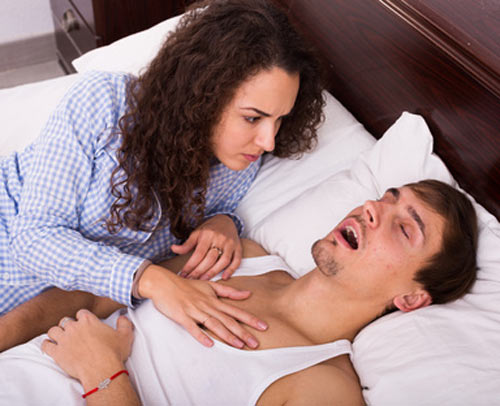
This page is built to cut through that — by the end, you'll be able to place your symptoms into a likely pattern and know if testing should be your next step.
Struggling to make sense of this doesn't mean you're doing something wrong — it usually just means no one's organized the information for you yet.
I'm not here to diagnose you. I'm here to help you decide, with more clarity, whether it's worth getting evaluated.
The clearest way to understand sleep apnea risk is to look at the pattern
Quick map
- Obstructive = airway collapse pattern
- Central = breathing-signal pattern
- Cause = the mechanism; risk factor = what raises the odds
- Then: stacks → testing tiers → your next step
Cause vs risk factor
Causes and risk factors for obstructive vs central sleep apnea

When I first started researching, I kept wondering the same thing: is sleeping on my back actually causing my symptoms, or is it just making them worse? That mix-up is exactly where this topic gets confusing.
- A cause is the actual mechanical reason your breathing pauses — like your airway collapsing.
- A risk factor is what makes that collapse more likely to happen — like sleeping on your back, or having a naturally narrow throat.
Risk factors raise the odds of that mechanism happening, and they can still meaningfully affect how severe it gets. Treatment targets the mechanism itself — which is exactly why it helps to know which risk factors tend to worsen nights like yours, not just which ones happen to be present.
Put simply: a cause is how the apnea happens. A risk factor is what makes it more likely to happen.
Now that the difference between cause and risk factor is clear, the next step is looking at the main patterns those causes can take.
The two main types: airway blockage vs. breathing-control problems
Not all sleep apnea comes from the same mechanism. The conditions generally fall into two main families. The most common is obstructive sleep apnea, which is a physical blockage problem where the airway closes up. The second is central sleep apnea, which is a communication problem where the brain briefly forgets to tell the body to breathe. Knowing which family your pattern belongs to is the first step toward finding relief.
When is Obstructive Apnea? When is Central Apnea?
One of the most useful ways to tell them apart is the breathing effort itself. In obstructive sleep apnea, the person is still trying to breathe — the airway is simply blocked. In central sleep apnea, the breathing effort itself decreases or stops, because the signal from the brain drops out for a period. [3]
Snoring is another useful clue: it is commonly linked to obstructive sleep apnea, because air is moving through a narrowed upper airway. In central apnea, loud snoring is not the defining feature — the pauses happen for a different reason entirely. [4]
If your story is mostly snoring and airway-type symptoms, start with the obstructive mechanics below; if it comes with a cardiac, neurological, or medication context, the central section further down covers that pattern instead.
New to this? Start here
If you are just beginning to explore this topic and want a gentle introduction before diving into specifics, I'd start here: [Sleep apnea causes overview]. If you want to look at the broader lifestyle and background contributors, I'd point you to [Sleep apnea risk factors].
What physically causes obstructive sleep apnea

What happens in your throat when you fall asleep
Obstructive sleep apnea occurs when the upper airway becomes blocked repeatedly during sleep, reducing or completely stopping airflow. [1]
The primary physical issue behind obstructive sleep apnea is what happens to your throat when you fall asleep. As you drift off, the muscles in your body naturally relax, losing some of their waking muscle tone.
Research confirms that this relaxation of throat muscles during sleep can contribute directly to airway blockage. [2]
For some people, this relaxation allows the soft tissues at the back of the throat to sag, narrowing the airway.
If the airway becomes too crowded, it can collapse, pausing your breath until your brain wakes you up just enough to tighten those muscles again.
On a sleep test, obstructive events are identified precisely this way: airflow decreases or stops while the body's breathing effort continues. [3] That distinction is what separates an obstructive event from a central one.
Tongue position and why it matters
In some anatomy patterns, the tongue plays a major role in blocking the airway. When muscle tone drops during sleep, a larger tongue or a tongue that sits further back in the mouth can easily slide backward, acting like a physical plug.
This is a mechanical issue, not something you can consciously control while sleeping.
Does a stuffed nose cause sleep apnea?
Many people wonder if a stuffed nose is the root cause of their sleep apnea. Usually, nasal blockage tends to make things worse rather than being the root cause on its own. When you cannot breathe well through your nose, it can make the airway tissues more likely to pull together, increasing the chances of a collapse.
Nasal congestion is recognised as a risk factor for obstructive sleep apnea in its own right. [2]
To explore these physical mechanics further, you can read about [Airway anatomy and collapse], [Tongue position airway collapse], and [Nasal blockage and apnea].
What raises the risk of obstructive sleep apnea

Weight-related patterns
Excess body weight is one of the strongest modifiable risk factors for obstructive sleep apnea — fat deposits around the upper airway can narrow the space available for airflow, making collapse more likely during sleep. [2] However, it is important to avoid reducing the whole condition to weight alone.
Recent weight gain matters too, not just your baseline size. Neck circumference and central body fat can track with sleep apnea risk as closely as overall body weight — which is part of why a sudden shift can change your airway dynamics even if your overall size hasn't changed dramatically.
Research suggests that a 10% increase in body weight is associated with roughly a 30% increase in breathing disruption severity, while a 10% weight loss is associated with a meaningful reduction — though weight loss improves the pattern in most people rather than eliminating it entirely. [5]
Sleep position and bedtime habits
How you sleep and what you do before bed can heavily influence your risk. Back sleeping allows gravity to pull the tongue and soft tissues directly downward into the airway. The effect is most pronounced when sleep apnea is supine-predominant — meaning breathing disturbances occur mainly while on the back. When apnea remains substantial in side-sleeping positions too, position alone is less likely to be the main driver.
Having alcohol near bedtime acts as a muscle relaxant, causing the throat muscles to become even looser than normal and increasing the chances of an airway collapse. Sedative medicines can have a similar effect — benzodiazepines and z-drugs may also worsen airway collapse in susceptible people, and are worth raising with a clinician if you take them regularly near bedtime. Both alcohol and sedating medications are recognised as factors that worsen airway relaxation during sleep. [2]
Body structure, family history, and hormonal shifts
Sometimes, risk factors are simply built into your biology. Inherited anatomy tendencies, like a naturally narrow throat or a recessed jaw, can make you prone to airway crowding. A family history of snoring or apnea is a strong pattern clue.
A naturally narrow airway, large tonsils, or large adenoids can also increase risk by reducing the space available in the airway. [1]
Hormonal shifts also play a role; for example, menopause-related risk shifts occur when protective hormones decline, changing how muscle tone and fat distribution affect the airway.
Risk in women is generally lower than in men, but rises after menopause — a pattern consistent with the role protective hormones play in maintaining airway muscle tone. [2]
For more detail on these specific contributors, visit [Weight and sleep apnea link], [Weight gain and sleep apnea], [Sleep position and apnea risk], [Alcohol effects on apnea], [Family history apnea risk], and [Menopause and sleep apnea risk].
What causes central sleep apnea and and why it's different

Central sleep apnea is not mainly an airway-collapse problem
Unlike the physical crowding of obstructive apnea, central sleep apnea causes are rooted in your body's internal communication. Central sleep apnea occurs when the brain does not send the signals needed to maintain breathing during sleep. [4] The signal your brain sends to start a breath temporarily stops — your airway might be completely open, but the breathing muscles simply don't receive the instruction to act.
On a sleep test, central events look different from obstructive ones: airflow decreases or stops, and the body's breathing effort is absent or reduced at the same time. [3] That absence of effort is the defining marker.
What points toward central sleep apnea instead
The risk factors for central sleep apnea look very different. You might recognise one of these situations:
- A specific cardiac or neurologic context, such as a history of heart issues or stroke. Heart failure, stroke, and opioid pain medicines are among the conditions most commonly associated with central sleep apnea. [2]
- Medication-related patterns, particularly opioid pain medications, which can slow your breathing drive during sleep. This is worth flagging for your clinician.
- Treatment-emergent situations (apnea that shows up during treatment) — where a person begins using a CPAP for obstructive apnea, and the brain's breathing signals temporarily get confused.
Why this distinction matters
Because the root causes are so different, guessing at solutions can be frustrating and unhelpful. Standard CPAP therapy, which acts as a splint to hold a collapsing airway open, might not resolve a signalling problem. For central sleep apnea, treatment commonly focuses on the underlying condition — such as addressing heart failure or adjusting opioid use — rather than simply splinting the airway open. [3] Understanding this difference is what makes finding the right treatment possible.
How risk factors add up — and why the combination matters

One factor may not tell the whole story
It is rare for one isolated factor to tell the whole story. Not every snorer has sleep apnea, and not every sleep apnea pattern looks the same.
For me, some nights were noticeably worse than others, waking up in a sweat, gasping for air, heart pounding, not sure for a second where I was, and by the next day, I'd feel lost, not sure what to tackle first — misplacing things, like my keys, that I always remembered to put in the same place. That's when I realized it wasn't just one symptom — it was the whole pattern that mattered.
Common obstructive-style risk stacks
Risk factors tend to group together. You might recognize one of these common stacks:
- Loud snoring, plus witnessed pauses in breathing — maybe your partner says you go quiet, then gasp — plus heavy daytime exhaustion.
- Recent weight gain, plus back sleeping, plus a drink near bedtime — for some people, even one drink can make the night noticeably worse.
- Going through menopause, plus unexplained fatigue, plus anatomy-related crowding in the throat.
- A family history of sleep apnea, plus narrow airway traits.
Why "I am not the typical patient" is a risky assumption
Many people put off looking into this because they don't match the stereotype of a typical sleep apnea patient. You're not overreacting by paying attention to this, and you're not failing if "just sleep more" hasn't been enough. If several of these risk factors stack up for you, that combination alone can be a reason to consider getting evaluated — regardless of your age, gender, or body type.
Once you can see your own stack forming, the next question is simple: does it look strong enough to be worth testing?
How to tell if your pattern is strong enough to be worth testing

Sorting your signals into tiers
If you're wondering whether your situation is serious enough to look into, it helps to sort the signs into tiers, rather than treating everything as equally urgent.
If you see yourself in Tier A, it's reasonable to take testing seriously, even if you don't match the stereotype of a typical patient.
Tier A — Strong signals
- Witnessed pauses in your breathing
- Waking up gasping or choking
- Daytime sleepiness that's affecting your safety, at work or while driving
Tier B — Stacked pattern
- Loud habitual snoring, plus deep fatigue
- Often layered with recent weight gain, back sleeping, or drinking close to bedtime
Tier C — Possible central-context flags
- Symptoms alongside a heart or neurological condition, or certain medications (for example, some sedating medications or strong pain medications)
- Worth discussing promptly with a clinician rather than waiting it out
Quick Reminder:
Don't stop or change any medication based on this page — treat it as a cue to ask the right questions, not as medical advice.
When "watch and wait" is less appropriate
It's easy to tell yourself you'll just try to sleep better next week. I put off even considering testing for a while myself — a sleep test can feel like a cost you're not sure is worth it when you don't even know what's wrong yet.
But when your symptoms are affecting your safety, your ability to drive, or your basic ability to function during the day, "watch and wait" stops being the safer choice. Getting tested isn't overreacting when the pattern is strong — it's about your safety, your ability to function, and not having to guess anymore.
What testing can clarify that self-guessing cannot
You can only guess so much from home. A sleep test is built to clarify the things guessing can't: the pattern of your breathing pauses, how severe they are, and whether what's happening looks more obstructive, central, or a mix of both. Depending on your situation, this can be done with a home test or in a sleep lab — either way, it replaces guesswork with an actual picture of what's happening.
Where to go next, without the overwhelm

If you think the main issue is mechanics or anatomy
If you suspect your physical structure is the main hurdle, explore [Airway anatomy and collapse], [Tongue position airway collapse], or [Nasal blockage and apnea].
If you think the main issue is lifestyle or recent changes
If you want to understand how your habits or recent changes are stacking up, read through [Weight and sleep apnea link], [Weight gain and sleep apnea], [Alcohol effects on apnea], or [Sleep position and apnea risk].
If you think the main issue is background risk
If you are looking at your family tree or life stage, you will find helpful guidance in [Family history apnea risk], [Menopause and sleep apnea risk], [Sleep apnea risk factors], or our [Sleep apnea causes overview].
Sources:
- National Heart, Lung, and Blood Institute (NHLBI). Sleep Apnea. https://www.nhlbi.nih.gov/health/sleep-apnea
- Mayo Clinic. Sleep Apnea — Symptoms and Causes. https://www.mayoclinic.org/diseases-conditions/sleep-apnea/symptoms-causes/syc-20377631
- Merck Manual Professional Edition. Obstructive Sleep Apnea; Central Sleep Apnea. https://www.merckmanuals.com/professional/pulmonary-disorders/sleep-apnea/obstructive-sleep-apnea — https://www.merckmanuals.com/professional/pulmonary-disorders/sleep-apnea/central-sleep-apnea
- National Institute of Neurological Disorders and Stroke (NINDS). Sleep Apnea. https://www.ninds.nih.gov/health-information/disorders/sleep-apnea — MedlinePlus. Sleep Apnea. https://medlineplus.gov/sleepapnea.html
- Longitudinal cohort evidence on weight and sleep apnea severity — cited in sleep medicine literature as a representative finding.
Home › Causes of Sleep Apnea
Affiliate Disclosure
As an Amazon Associate I earn from qualifying purchases.
Recent Articles


-
The Best CPAP Pillow For Sleep Apnea
Jul 22, 18 01:15 PM
 Why do you need a CPAP pillow, Which pillow is the best for CPAP users, and how to make one if you can't afford It.
 -
How To Use Portable Pulse Oximeter To Track Sleep Apnea Treatment?
Jul 09, 18 02:51 PM
 How can a portable pulse oximeter help with CPAP treatment? Can you trust a pulse oximeter to monitor sleep apnea? Click here to find the answers.
 -
The 3 Best Ways To Stop CPAP Dry Mouth
Jun 23, 18 11:02 AM
 How can you prevent and treat CPAP dry mouth? A practical guide to assist you with dry mouth when using the CPAP machine.
Subscribe
Don't worry - your e-mail address is totally secured. I promise to use it only to send you monthly updates with useful tips to improve you sleep apnea.


