Choosing a Sleep Apnea Mask
How to Choose the best CPAP mask?
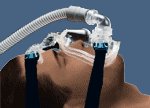
What sleep apnea mask can help treat your sleep breathing disorder? What to look for in a DME shop when you choose the mask?
Choosing the right face mask for your positive airway pressure therapy is the most important step. Your success in CPAP treatment for sleep apnea depends on your mask.
Many people with CPAP have problems with their treatment and they stop using the machine.
Unfortunately, CPAP therapy is only beneficial as its utilization. Thus less than optimal CPAP utilization is a significant problem in clinical practice.
Using the wrong sleep apnea mask can cause you more problems than you already have. Just check the CPAP side effects to see how uncomfortable the CPAP can be if you don't have the right mask.
No wonder that maximizing the patient adherence to CPAP is the greatest challenge for the sleep clinician.
In this article you'll learn how to increase your CPAP adherence by choosing the best CPAP mask for your face.
Choosing the Best Style for Your Sleep Apnea Mask
It's a good idea to test a mask before buying it. A sleep mask that fits for one patient with sleep apnea may have air leaks on you. And that's because everyone has different face shapes and needs.
The good news is that you have a wide range of CPAP masks to choose from:
Full Face Sleep Apnea Mask
These masks cover your mouth and nose, with straps that stretch across your forehead and cheeks.
A disadvantage with full face masks is that they may make some people feel claustrophobic. However, the masks provide a strong fit if you move a lot in your sleep, and may help if you are forced to only to your mouth.
For more info about full face masks, see CPAP Full Face Masks.
Nasal Sleep Apnea Mask
The nasal masks appear to be preferred by most patients, because are less cumbersome and there are less straps that cover your face.
However, nasal mask may not work for you if you are a mouth breather, you sleep on the side, or you move a lot in your sleep.
For more info about nasal masks, see CPAP Nasal Mask.
CPAP mask size is another important aspect that you need to pay attention. Read carefully the manufacturer product instructions to see if the size that you are looking exists. Ask also the CPAP supplier more information about the product that you are looking for.
Nasal symptoms complains
Many patients complain of nasal symptoms, such as nasal dryness, nasal congestion, sneezing, or epistaxis, when they use the mask for sleep apnea.
The researchers discovered that humidification can remedy these problems and consequently has become an important feature in CPAP therapy.
So, if you discover that you have nasal problems when using CPAP therapy, buy a heated humidifier that can be attached to the CPAP machine. Or, you can choose a CPAP that already has included a humidifier.
Using the CPAP Pressure Ramp Feature
Many CPAP devices come equipped with a pressure ramp.
This feature allows pressure to be reset to a low level and then gradually increased over time, to improve your comfort by allowing you sufficient time to fall asleep before higher pressure are reached.
Claustrophobia Problems with CPAP Masks
Some patients have claustrophobic feelings when they use the sleep apnea mask. A tip to avoid this problem is to practice by holding the CPAP mask up to your face, without the straps and hose.
Then, try holding the mask on your face with hose attached to the CPAP machine at a low pressure. Next, wear the CPAP mask with the straps and hose and with the CPAP machine turned on.
After you get used to the mask, you can sleep with it on your face.
It's not easy to tolerate CPAP therapy, but it's important to stick with it. Try various sleep apnea masks before purchase and if your are unsatisfied after purchase, just try another type. But don't give up the treatment!
Take the time to get used to CPAP therapy, work with CPAP supplier and with your doctor to ensure the best fit and device for you.
Some more interesting pages for you to check out:
- Sleep apnea pillow
- Turbinate reduction for patients with obstructive apnea
- Sleep apnea death - very rare, but possible

Affiliate Disclosure
As an Amazon Associate I earn from qualifying purchases.
Recent Articles


-
The Best CPAP Pillow For Sleep Apnea
Jul 22, 18 01:15 PM
 Why do you need a CPAP pillow, Which pillow is the best for CPAP users, and how to make one if you can't afford It.
 -
How To Use Portable Pulse Oximeter To Track Sleep Apnea Treatment?
Jul 09, 18 02:51 PM
 How can a portable pulse oximeter help with CPAP treatment? Can you trust a pulse oximeter to monitor sleep apnea? Click here to find the answers.
 -
The 3 Best Ways To Stop CPAP Dry Mouth
Jun 23, 18 11:02 AM
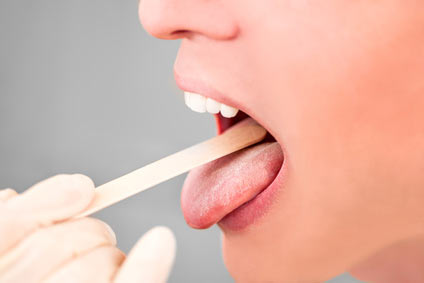 How can you prevent and treat CPAP dry mouth? A practical guide to assist you with dry mouth when using the CPAP machine.
Subscribe
Don't worry - your e-mail address is totally secured. I promise to use it only to send you monthly updates with useful tips to improve you sleep apnea.