Sleep Study
Diagnosing Sleep Apnea with a Sleep Study
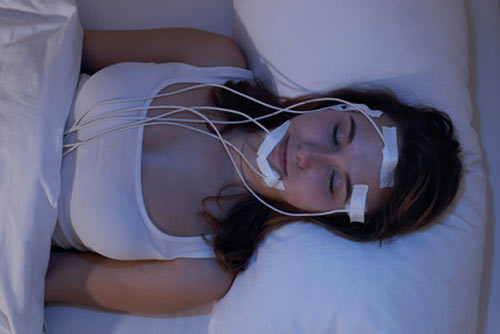
A sleep study confirms the diagnosis of sleep apnea and shows how severe the problem is.
Determining the severity of any disease is important because it’s one of the necessary factors in selecting the best treatment.
With a sleep study (sleep test), the doctor will understand what is happening while you sleep.
The sleep technicians will hook you up to various wires that measure your brain activity, oxygen levels, movement, and the sounds that you make.
Although it's not painful to be hooked to wires all over your body, the procedure is annoying and it may be difficult for you to fall asleep.
In this page you will discover some interesting videos that will explain all the aspects of sleep disorders centers and sleep studies.
Benefits of the Sleep Study
The advantage of having a sleep test is obvious, because the test is considered to be the best method to accurately diagnose sleep disorders, including sleep apnea.
However, with a sleep test you can do other helpful things, too:
- set the correct levels of positive airway pressure therapy - this is necessary when you bought a new CPAP and you don't know what pressure do you need to breathe at night with your CPAP machine.
- to find if you have strange behaviors during sleep that can be harmful for you or for your bed partner.
- to see if you have narcolepsy or restless leg syndrome.
- to check if your severity of sleep apnea has been improved.
Did You Learn Something From Your Sleep Study?
Not all the doctors will tell you all you need to know about your sleep quality.
Critical information that can help you in your adaptation with CPAP therapy is not always shared by doctors.
Here are some important questions to ask about your sleep study results.
Visiting a Sleep Study Center
Your first visit to a sleep study - What to expect?
The next to video episodes explain what happens during a sleep study:
When to Go For a Sleep Test?
There are a couple of signs that everyone should pay attention:
your are feeling tired despite getting more sleep than the amount that used to make you feel rested.
- your friends or family told you that you seem unusually sleepy.
- you are falling asleep at movies, at work, while driving, watching TV, at parties, despite getting many hours of sleep in the night.
- someone told you that you snore very loud or stop breathing in your sleep.
- sometimes you wake up gasping for breath.
- you have trouble getting a restful sleep for more than four or five weeks.
- you have a family member who has sleep apnea.
- someone told you that you make choking or snorting sounds during sleep.
- your bed partner is moving in another room because your sleep is very disruptive.
If you have these symptoms, it's not a bad idea to see first a family or primary doctor. Maybe you have anxiety problems, or heart problems that may be your source of sleep trouble.
You might also take along a tape recording of your snoring.
However, primary care doctors are not well prepared about sleep science, and many of them can't recognize the signs of many sleep disorders.
So, if you suspect you have a sleep disorder, it's up to you to speak about this with your doctor. And don't hesitate to ask for a referral to a sleep specialist, during your medical visit.
My Sleep Study
In this video, a man explains how was the sleep study for him:
Why Should You Have a Sleep Test?
Sleep apnea is a complex sleep disorder and cannot be treated if the doctors don't know how severe it is. That's why is very important to have a correct diagnosis of your problem.
Through a sleep test, the doctor has to answer two questions, in order to diagnose sleep apnea correctly:
- do you actually have sleep apnea syndrome, or is it another sleep disorder, such as narcolepsy, restless leg, periodic limb movement or insomnia?
- do you have other conditions that may complicate your sleep apnea disorder and your treatment, such as heart disease, obesity, some type medications, or alcohol?
Bottom line...
If you suspect you have sleep apnea, it's important to take a sleep test. The essence of my advice is simple: incorrect or wrong treatment can be harmful to your body. No doubt about it...
How is Sleep Apnea Diagnosed?
Sleep apnea can be diagnosed using a variety of methods, including:
- Epworth Sleepiness Scale will decide if you need a sleep study or not. You can take this test in any moment of the day, at home.
- Sleep apnea questionnaire - There is no simple way to find if you have sleep apnea than to test yourself on the Sleep Apnea Questionnaire.
- Sleep monitors - The quantity and quality of your sleep is serious affected if you have sleep apnea breathing disorder. With a sleep monitor you can discover precious information about your sleep and your treatment effectiveness.
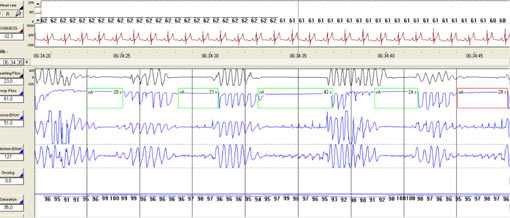
- Polysomnography - to make a continuous record of your sleep. You will have a lot of thin electrodes and other sensors pasted on your body, to take a variety of readings during the night.
- Home Obstructive Sleep Apnea Diagnosis
- a simple method to discover if you have obstructive sleep apnea.
- Multiple sleep latency test - this test usually follows the polysomnography test. It shows how sleepy you are during daytime. This test is important on diagnosing sleep apnea, narcolepsy, and sleep deprivation.
- Home Sleep Test - if you don't have in your area a sleep center, or you are immobilized in bed, a portable equipment can be useful, such as apnea detectors or wrist actigraphy.
These readings are collected on a computer file, called a polysomnogram, that can be analyzed by sleep doctors.
However, the information collected from these portable recordings is less reliable for diagnosis and treatment, so a sleep study at a sleep center in preferred.
For more information about the sleep test you can click here.
Home › Sleep Study
Affiliate Disclosure
As an Amazon Associate I earn from qualifying purchases.
Recent Articles


-
The Best CPAP Pillow For Sleep Apnea
Jul 22, 18 01:15 PM
 Why do you need a CPAP pillow, Which pillow is the best for CPAP users, and how to make one if you can't afford It.
 -
How To Use Portable Pulse Oximeter To Track Sleep Apnea Treatment?
Jul 09, 18 02:51 PM
 How can a portable pulse oximeter help with CPAP treatment? Can you trust a pulse oximeter to monitor sleep apnea? Click here to find the answers.
 -
The 3 Best Ways To Stop CPAP Dry Mouth
Jun 23, 18 11:02 AM
 How can you prevent and treat CPAP dry mouth? A practical guide to assist you with dry mouth when using the CPAP machine.
Subscribe
Don't worry - your e-mail address is totally secured. I promise to use it only to send you monthly updates with useful tips to improve you sleep apnea.