Snoring Devices Reviews
THE MOST COMMON DEVICES TO STOP SNORING
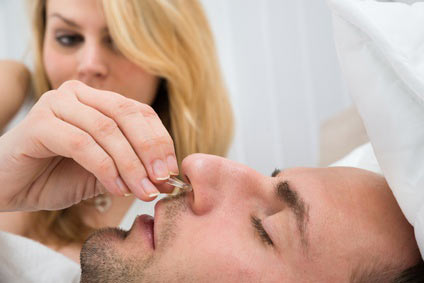
If you're looking for snoring devices, then it's more likely that you want to read a couple of reviews before buying the product.
It's important to know that these anti snoring solutions are very effective only if you have simple snoring symptoms.
If your snoring turns into sleep apnea, then some of the cheap devices will not be useful.
In this article you'll discover the most efficient devices that can help simple to severe snoring. For devices that can treat sleep apnea, please check sleep apnea devices.
The devices for harmless snoring include the following:
- nasal strips and mechanical dilators
- positional therapy snoring devices
- oral devices
- CPAP
Alcohol and Weight Gain with Snoring
Avoiding alcohol and weight gain, together with these devices, will increase the chances to treat your snoring problem.
Nasal Strips and Mechanical Dilators
The nasal strips or mechanical dilators are recommend if you have snoring caused by nasal congestion.
These devices help maintain the nasal valves open and prevent collapse doing deep inspiration.
Nasal Strips
The nasal strips, which you've probably seen worn by some sports athletes, consist of two flat parallel bands of plastic embedded in a special adhesive pad.
When you place them across the nose, the bands lift the skin upward and outward, pulling open the flexible cartilage walls from the nose and widening the nasal valve.
The following video explains how to use the nasal strips:
Click here to buy the Breathe Right Nasal Strips.
Mechanical Dilators
The mechanical dilators, usually made of plastic, are inserted just inside the nostril and push outward.
The most famous nasal dilators that can help eliminate snoring and mild obstructive sleep apnea is SnoreCare.
Bottom line...
- nasal strips and mechanical dilators can work if your snoring results from a narrowed nasal valve.
- If your snoring originates from the mouth and throat you won't benefit from this devices.
Positional Therapy Snoring Devices
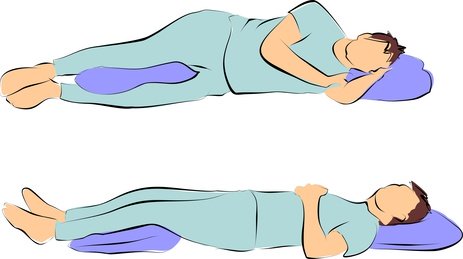
In positional therapy, the patient sleeps on his side or stomach as opposed to on the back, as most patients snore more in supin position.
The most common positioners are:
Considering that breathing disorders when lying on the back are worse than in any other sleeping position, the side sleeping backpack can be one of the best snoring solutions.
Bottom line...
- Positional therapy can be very effective in patients with snoring and sleep apnea, where the main cause is the obstruction of the upper airways.
- It doesn't help you if your main cause of snoring is nasal obstruction, or you have a severe sleep apnea.
Dental and Tongue Devices for Snoring
Oral devices can be used in severe snoring or sleep apnea, as an alternative to CPAP.
With so many different oral appliances available, it may appear difficult for you to choose one.
However, these oral devices can be classified in only two categories:
- Tongue Retaining Device (TRD) - it works by holding the tongue in a forward position by means of a suction bulb.When the tongue is in this position, the device keeps the tongue from collapsing during sleep and obstructing the airway in the throat.
- Mandibular Advancing Device (MAD) - it works by repositioning the mandible pushing it in an outward position during sleep.This repositioning serves to open the airway by indirectly pulling the tongue forward by the negative pressure occurring in the mouth.It also holds the lower jaw and other structures in a stable position to prevent opening the mouth during sleep.
Bottom line:
- Good - the oral appliances can be helpful if you have primary snoring or mild to moderate obstructive sleep apnea.
- Bad - they are very uncomfortable for many people with sleep disorders, and is necessary a nightly use to have an effective treatment.

Continuous Positive Airway Pressure (CPAP)
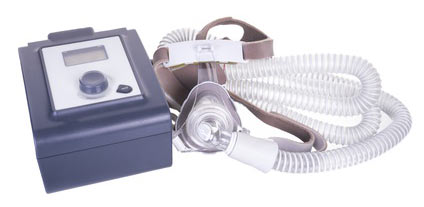
CPAP is recognized as the most effective treatment for severe snoring and obstructive sleep apnea, but unfortunately is not so easy to tolerate wearing this device.
The CPAP therapy provides a positive pressure to your airway through a device worn on the face.
Bottom line:
- Good - If you can tolerate CPAP for one full night you will feel fresh and active in the morning, like in the old days.
- Bad - compliance with positive airway pressure remains the single issue for a lot of patients with snoring and sleep apnea.
Home › Why Do People Snore? › Snoring Devices
Affiliate Disclosure
As an Amazon Associate I earn from qualifying purchases.
Recent Articles


-
The Best CPAP Pillow For Sleep Apnea
Jul 22, 18 01:15 PM
 Why do you need a CPAP pillow, Which pillow is the best for CPAP users, and how to make one if you can't afford It.
 -
How To Use Portable Pulse Oximeter To Track Sleep Apnea Treatment?
Jul 09, 18 02:51 PM
 How can a portable pulse oximeter help with CPAP treatment? Can you trust a pulse oximeter to monitor sleep apnea? Click here to find the answers.
 -
The 3 Best Ways To Stop CPAP Dry Mouth
Jun 23, 18 11:02 AM
 How can you prevent and treat CPAP dry mouth? A practical guide to assist you with dry mouth when using the CPAP machine.
Subscribe
Don't worry - your e-mail address is totally secured. I promise to use it only to send you monthly updates with useful tips to improve you sleep apnea.