CPAP Gas Problem - Aerophagia?
by Mel
(Ft Lauderdale)
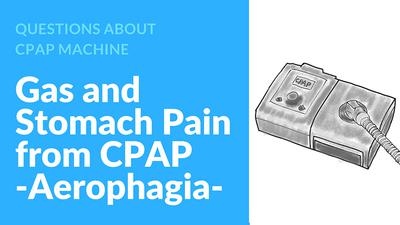
Aerophagia - Gas and Stomach Bloating from CPAP Therapy
I get a tremendous amount of gas every morning from my CPAP machine, so much so that I do not want to continue using it.
Neither the company I got the machine from nor my doctor has heard of this complaint before.
Do you have any solutions to my problem?
Answer
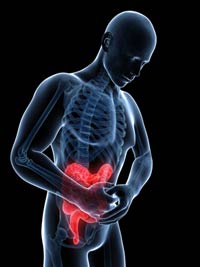 You are likely experiencing aerophagia - the swallowing of air - while using the CPAP during sleep.
 People with sleep apnea commonly name this problem CPAP gas.
You may be relieved to know that CPAP gas is common for people new to CPAP. Over 52% of patients with obstructive sleep apnea (OSA) and CPAP experience symptoms of aerophagia (1).
The discomfort associated with the aerophagia, including stomach pain, belching, bloating, flatulence, low appetite, can result in avoiding CPAP therapy.
In this page you'll learn:
- Why do you have gas in your stomach while using the CPAP machine,
- How to prevent and treat the CPAP gas.
What is Aerophagia?
Aerophagia in OSA patients is a complication that appears during CPAP therapy, in which some air is entering the esophagus and stomach rather than the lungs(2).
Symptoms and Side Effects of Aerophagia
When the pressurized air from CPAP enters the stomach, common complaints can appear:
- gastric distension or bloating (1).
- flatulence (passing wind or farting),
- belching (burping),
- stomach pain (severe pain in rare cases),
- vomiting (rare cases)
- gastric insufflation (very rare - the risk exists in patients with COPD and Pulmonary Edema) (3).
Causes of Aerophagia
Why Does Your CPAP Gives You Gas?
 Nothing is more distressing than waking up with a bloated stomach and starting to fart and burp all day.
 You know that aerophagia started when you began the CPAP therapy. You also know that many other CPAP users don't have this problem. So why do you get gas with CPAP while others don't?
The primary belief is that if you have weak esophagus muscles, then the esophagus won't close properly and the CPAP air will enter your stomach.
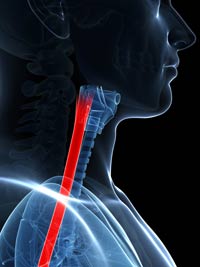
The anatomy of the esophagus, especially the lower end, is fairly complex. Science discovered that two esophageal sphincters might contribute to CPAP gas in the stomach:
- upper esophageal sphincter (UES) - is a bundle of muscles at the top of the esophagus. It prevents the food to go down the trachea (the channel where the air goes to the lungs)
- lower esophageal sphincter (LES) - muscles at the low end of the esophagus, that keep the stomach content going upwards. (4)
- Using your CPAP machine's ramp button,
- Sleeping at an inclined position,
- Avoiding food and beverages late in the day.
- Not eating less than 2 hours before bedtime.
- Use an acid reducer (if you don't already).
- Keep Gas-x Tablets in your nightstand for those nights when you wake up with a problem. It does seem to help bring those bubbles up. You need to sit up take a Gas-X, and stay upright for a few minutes until the air comes up.
- Keep Pepto-Bismol
in your nightstand for final back-up if you continue to be uncomfortable. But read the instructions carefully about how LONG you can take them.
So, which esophageal sphincter has a weak tone in CPAP induced aerophagia?
There are still debates on this matter, but the recent studies suggest that the upper esophageal tone, rather than the LES, is the one that causes the CPAP gas(1).
In their study, the scientists observed that UES barrier pressure decreases during sleep (particularly during slow wave sleep), making it more easily to being breached by CPAP pressure, in a dose-dependent manner (5).
Once the air passes the UES and enters the esophagus, the lower esophageal sphincter relaxes (as a natural reflex), encouraging the air to enter the stomach.
Why Does UES Opens During My Sleep?
 Scientists found a link between GER (gastroesophageal reflux) and aerophagia in obstructive apnea patients (1).
In their study, 57% of people with CPAP aerophagia also had GER symptoms.
The other patients in the study already had GER symptoms from other causes.
The results show that CPAP aerophagia is associated with GERD and GERD medication use.
Ask your doctor if you have risk factors for GERD, especially hiatal hernia.
GERD is also common in patients with sleep breathing disorders, occurring in 54% to 76% of patients (6). The reasons are not fully understood.
One explanation is that OSA causes decreased intrathoracic pressure during apneic episodes. It's also causing increased arousals and reduced sleep efficiency, which results in LES relaxation (7).
Also, the swallowing is more frequent within 30 seconds before GER events, which also can permit the air to enter (8).
I hope now you start to understand why GERD combined with low UES tone is causing aerophagia in people with OSA.
Treatment for CPAP Aerophagia
Let's start with the good news: for many of us, CPAP-induced aerophagia seems to disappear over time.
Perhaps the esophageal muscles gradually strengthen with nightly "resistance workouts" introduced by Positive Air Pressure therapy.
The bad news: there are no scientific data to show how to best manage CPAP induced aerophagia. The only medication which was proven to prevent lower esophageal sphincter relaxation is Baclofen (9).
Auto-adjusting CPAP machines showed improvements in aerophagia treatment. However, data needs to be collected to prove that using the APAP or BiPAP machines can decrease aerophagia.
The Best Way to Prevent Aerophagia
The best way to prevent aerophagia is to increase the UES tone or the UES pressure during sleep.
There are simple exercises, developed by Dr.Reza Shaker, which is to strengthen the UES muscles and to improve dysphagia, hiatal hernia, and GERD (9).
Here is a video that explains how to do Shaker exercises with a device:
This video shows how to practice Shaker exercises without a device:
Lowering CPAP Pressure or Using APAP Machines
Some CPAP patients who suffer from aerophagia usually solve this problem by having their physician lower their air pressure and/or change PAP machine type.
For many, an APAP will help with aerophagia by merely reducing the mean airway pressure.
For others, BiPAP or C-Flex, which reduce exhalation pressure (EPAP) seems to be in order.
Using Anti-bloating Tablets
Unfortunately, anti-gas or anti-bloating tablets will not help with CPAP-induced aerophagia, although other contributing gastronomical sources of gas may be helped by these medicines.
However, Gas-X
 can ease the pain in some patients.
Other Methods to Improve CPAP Aerophagia
Some strategies can help such as:
As always, consult with your physician if you notice any new or unusual symptoms when starting CPAP, including discomfort.
Good luck, Mel! I hope it helps. Don't be afraid to comment back.
Remy Thierry
Founder of Sleep Apnea Guide
References:
1. Symptoms of aerophagia are common in patients on CPAP therapy and are related to the presence of nighttime GER (Kelly Shepherd, Ph.D)
2. Aerophagia and GERD in Patients using Continuous Positive Airway Pressure: A Preliminary Observation (Watson NF)
3. CPAP in the Treatment of Pulmonary Edema & COPD By James F. Goss, MHA, MICP and Jonathan Zygowiec, BS, EMT-I, EMD
4. http://www.webmd.com/digestive-disorders/picture-of-the-esophagus
5. Modulation of upper and lower esophageal sphincter tone during sleep
6. GER in patients with sleep apnea syndrome.Graf KI, Karaus M, Heinemann S, Körber S, Dorow P, Hampel KEZ Gastroenterol. 1995 Dec; 33(12):689-93.)
7. Ing AJNgu MCBreslin AB Obstructive sleep apnea and GER. Am J Med. 2000;108(suppl 4A)120S- 125S
8. Kerr PShoenut JPMillar TBuckle PKryger MH Nasal CPAP reduces gastroesophageal reflux in obstructive sleep apnea syndrome. Chest. 1992;1011539- 1544
9. CPAP-Related Aerophagia: Awareness First!
Comments for CPAP Gas Problem - Aerophagia?
|
||
|
||
|
||
|
||
|
||
|
||
|
||
|
||
|
||
|
||
|
||
|
||
|
||
|
||
|
||
|
||
|
||
|
||
|
||
|
||
|
||
|
||
|
||
|
||
|
||
|
||
|
||
|
||
|
||
|
||
|
||
|
||
|
||
|
||
|
||
|
||
|
||
|
||
|
||
|
||
|
||
|
||
|
||
|
||
|
||
|
||
|
||
|
||
|
||
|
||
|
||
|
||
|
||
|
||
|
||
|
||
|
||
|
||
|
||
|
||
|
||
|
||
|
||
|
||
|
||
|
||

Affiliate Disclosure
As an Amazon Associate I earn from qualifying purchases.
Recent Articles


-
The Best CPAP Pillow For Sleep Apnea
Jul 22, 18 01:15 PM
 Why do you need a CPAP pillow, Which pillow is the best for CPAP users, and how to make one if you can't afford It.
 -
How To Use Portable Pulse Oximeter To Track Sleep Apnea Treatment?
Jul 09, 18 02:51 PM
 How can a portable pulse oximeter help with CPAP treatment? Can you trust a pulse oximeter to monitor sleep apnea? Click here to find the answers.
 -
The 3 Best Ways To Stop CPAP Dry Mouth
Jun 23, 18 11:02 AM
 How can you prevent and treat CPAP dry mouth? A practical guide to assist you with dry mouth when using the CPAP machine.
Subscribe
Don't worry - your e-mail address is totally secured. I promise to use it only to send you monthly updates with useful tips to improve you sleep apnea.
[?]Subscribe To This Site