Changing pressure of CPAP machine?
by Anita
(Balliang East)
Can you change the pressure on your own CPAP machine?
Is it recommend?
Read this article to learn more:
My husband had been told to have his machine set at 7cm, he is only averaging 3 hours sleep and has been using the machine for 2 weeks, he struggles for air after the 3 hour period, can he put the machine up a more?
Answer
Changing the CPAP pressure can cause problems, but a little one centimeter of H2O plus or minus can't affect your husband's health.
8 cm H2O is almost 0.11 PSI, which represents a low pressure for the lung's capacity.
Let me explain: you probably know that the unit of pressure used for CPAP is centimeters of water (cm H2O). Many people don't really understand this unit of measurement since very few other things we encounter are described using these units.
However, you or your husband can be familiar with the PSI unit of measurement, and if you translate the 7 cm H2O measurement in PSI, you will realize that a CPAP machine delivers a very low pressure.
So, if your husband raise the pressure from 7 cm H2O to 8 cm H20 (0.11 PSI) it shouldn't be a problem for the lungs or other organs. The human lungs can normally withstand the relatively low and safe pressure settings commonly used in CPAP therapy.
The question is what happens with the quality of the CPAP treatment, if the sleep apnea patient changes the settings without any training? How do you know it works for you? Changing settings by 1 or 2 cms might not cause great problems, but where do you draw the line?
There are some people who should not touch the buttons of a DVD player or VCR, much less those on a "medical device". But for reasonably intelligent people who have spent a great deal of time researching this kind of treatment and who have a good understanding not only of the treatment but also their own health issues, taking more control of one's own cpap treatment can be a good thing.
A clear understanding of the consequences of "under-treatment" if one lowers the pressure is more important, I believe, than having concerns over raising the pressure a few notches.
Of course the more underlying health problems a person has, the more important it is to have doctors to consult.
Interestingly, I did find a study that showed a high rate of efficacy for patients who self-titrated their own CPAP machines, based on qualitative feedback, such as snoring. This was done under supervision with instructions over the phone to save money on doctors' visits. The patients who followed this protocol seemed to adjust better to the treatment. Sounds like a promising approach to me.
In summary, this study demonstrates that self-titration of CPAP in patients with OSA is as efficacious as manual titration in a sleep laboratory, with similar subjective and objective outcomes, and CPAP compliance. Clearly, for this strategy to be successful, the patient must understand when and how to change the CPAP.
Although the patient population studied did include a wide age range, this strategy would not be feasible for intellectually disadvantaged patients and those with physical handicaps that would severely limit vision and/or manual dexterity.
Nonetheless, the findings from this study imply that routine overnight polysomnography is unnecessary for the purpose of CPAP titration in many patients with OSA, provided that the patient is given some basic education and support.
Bottom line... An advice for your husband: take control of your own treatment, understand how your equipment works, and be prepared to tweak masks and machines, in order to have the best possible experience and results. All of this should be done within guidelines established by your doctor.
I hope it helps!
Remy Thierry
Founder of Sleep Apnea Guide
Comments for Changing pressure of CPAP machine?
|
||
|
||
|
||
|
||


Affiliate Disclosure
As an Amazon Associate I earn from qualifying purchases.
Recent Articles


-
The Best CPAP Pillow For Sleep Apnea
Jul 22, 18 01:15 PM
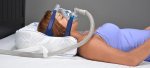 Why do you need a CPAP pillow, Which pillow is the best for CPAP users, and how to make one if you can't afford It.
 -
How To Use Portable Pulse Oximeter To Track Sleep Apnea Treatment?
Jul 09, 18 02:51 PM
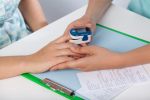 How can a portable pulse oximeter help with CPAP treatment? Can you trust a pulse oximeter to monitor sleep apnea? Click here to find the answers.
 -
The 3 Best Ways To Stop CPAP Dry Mouth
Jun 23, 18 11:02 AM
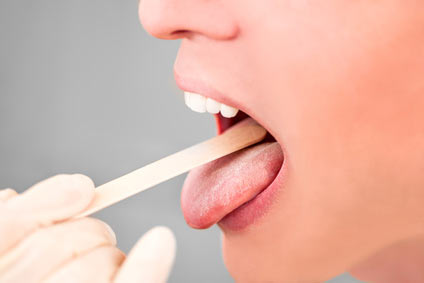 How can you prevent and treat CPAP dry mouth? A practical guide to assist you with dry mouth when using the CPAP machine.
Subscribe
Don't worry - your e-mail address is totally secured. I promise to use it only to send you monthly updates with useful tips to improve you sleep apnea.
[?]Subscribe To This Site