Sleep Apnea in Child
Prevalence and risk factors of sleep apnea in children
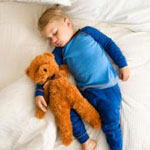
How will you know if your child has sleep apnea? Can you prevent the risk factors that may cause sleep breathing disorders in your child?
The very first thing that may cause sleep apnea in children is swollen tonsils, waist size and body mass index. These are also the most common risk factors for sleep apnea in adults. However, children with apnea disorder have a different behavior compared with adults.
According to a study about sleep disorders in children:
- BMI and waist circumference were significant and strong predictors of apnea in children, to all severity levels: snoring, mild sleep apnea and moderate sleep apnea.
- Nasal anatomic factors such as chronic sinusitis, nasal drain and rhinitis were significant risk factors of mild sleep apnea.
- Tonsils or adenoids size, are significant factors for moderate sleep apnea in toddlers and children.
 What is a Mild and Moderate Sleep Apnea in a Child?
Mild apnea in children has an apnea hypopnea index - AHI - of at least one but less than five breathing pauses per hour of sleep!
Moderate sleep apnea in child has an apnea hypopnea index of five or more breathing pauses per hour of sleep!
However, this study suggest that the causes of sleep apnea in kids are more complex, and there may be a systematic influence of obesity. That's why adenotonsillectomy may not always be the most effective treatment for sleep apnea.
Here is a video demonstrating sleep apnea in a child:
 Video with Sleep Apnea in Child
The First Warning of Sleep Apnea in Child: Loud Snoring
The first warning sign of obstructive sleep apnea in children is snoring.
Snoring is a common form of sleep breathing disorder that occurs when soft tissues in the back of the throat collapses and blocks the airway during sleep.
A sleep apnea snoring tends to be loud and irregular, and include obvious pauses in breathing and gasps for breath. Parents often notice that the child seems to be working hard to breathe during sleep.
Other Risk Factors for Sleep Apnea in a Child
There are some other risk factors for sleep disorders and sleep apnea in children, that are not necessarily related to weigh gain:
- newborns that are considered premature due to weight and timing, especially small premies (under 3 lbs).
- child identified with Asperger's, ADHD, Autistic Spectrum Disorders, Nonverbal Learning Disorders, Bipolar Disorder.
- children with migraines and headaches.
- child with a history of acid reflux.
- child with asthma.
- children with a history of food allergies and intolerance.
- girls who have difficulties with menstruation in puberty.
- children who tend to fall asleep during seat work or lectures.
- child with a history of early, repeated trauma (which can lead to eating disorders, etc.)
Awareness of Sleep Apnea in Schools
A big concern for sleep therapists is that in many schools, programs and day care facilities there is a lack of awareness of sleep disorders and their relationship with neurological problems.
Some more interesting pages for you to check out:

Affiliate Disclosure
As an Amazon Associate I earn from qualifying purchases.
Recent Articles


-
The Best CPAP Pillow For Sleep Apnea
Jul 22, 18 01:15 PM
 Why do you need a CPAP pillow, Which pillow is the best for CPAP users, and how to make one if you can't afford It.
 -
How To Use Portable Pulse Oximeter To Track Sleep Apnea Treatment?
Jul 09, 18 02:51 PM
 How can a portable pulse oximeter help with CPAP treatment? Can you trust a pulse oximeter to monitor sleep apnea? Click here to find the answers.
 -
The 3 Best Ways To Stop CPAP Dry Mouth
Jun 23, 18 11:02 AM
 How can you prevent and treat CPAP dry mouth? A practical guide to assist you with dry mouth when using the CPAP machine.
Subscribe
Don't worry - your e-mail address is totally secured. I promise to use it only to send you monthly updates with useful tips to improve you sleep apnea.